


Tracheal intubation of the critically ill happens under pressure: every extra attempt can add hypoxemia and other complications. The DEVICE trial compared video and direct laryngoscopy in real emergency and intensive care practice.
The study
A randomized trial published in the New England Journal of Medicine (Prekker et al., 2023) with 1,417 adults intubated in emergency departments and intensive care units. The primary outcome was successful intubation on the first attempt.
| Outcome | Video laryngoscopy | Direct laryngoscopy |
|---|---|---|
| First-attempt success | 85.1% (600/705) | 70.8% (504/712) |
| Absolute difference | 14.3 percentage points (95% CI 9.9–18.7) | — |
| Severe complications | 21.4% | 20.9% |
By operator experience
In an exploratory analysis the advantage was larger among less experienced operators:
| Operator's previous intubations | Difference in first-attempt success |
|---|---|
| Fewer than 25 | 26.1 points (95% CI 15.4–36.8) |
| 25 to 100 | 12.3 points (95% CI 6.8–17.7) |
What it means for training
Our reading: because the benefit appears mostly among operators with less practice, deliberate simulation training with the device is part of procedural safety, not an add-on.
Sources
- Prekker ME, et al. Video versus direct laryngoscopy for tracheal intubation of critically ill adults. N Engl J Med 2023;389(5):418-429.
- The Bottom Line · DEVICE trial summary
- Critical Care Reviews · DEVICE
- Vanderbilt University Medical Center · press release
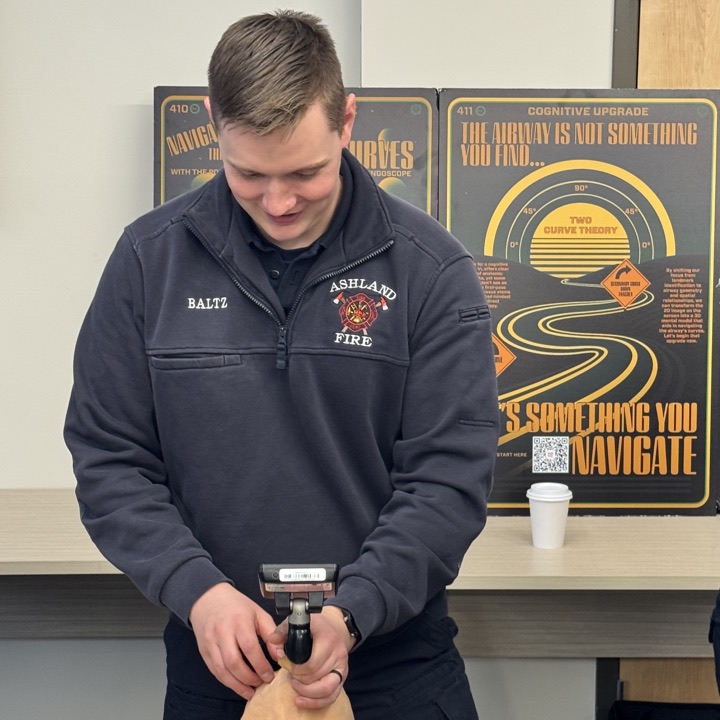
Image: courtesy of PAC (The Protected Airway Collaborative).
Educational content; it does not replace clinical judgment or your institution's guidelines.